A great massage therapist isn’t just someone who knows how to press on sore muscles. They’re the quiet professionals who turn tension into calm, pain into relief, and stress into stillness-often without saying a word. Whether you’re dealing with chronic back pain, recovering from an injury, or just need to reset after a long week, the right therapist can make all the difference. But how do you spot one? It’s not just about certifications or spa settings. It’s about presence, skill, and care. This guide breaks down the real qualities that separate good therapists from truly great ones-and how to find one who fits your needs.
Massage isn’t some new-age trend. It’s been around for thousands of years. Ancient Egyptians used massage in tombs for healing rituals. Chinese texts from 2700 BCE describe pressure techniques. The Greeks and Romans integrated it into athletic training and public baths. Modern Western massage as we know it today was shaped in the 1800s by Swedish physician Per Henrik Ling, who combined movement and touch into what became Swedish massage. Today, it’s a blend of tradition and science-backed by research from organizations like the National Institutes of Health on its effects on cortisol levels and muscle recovery. A great therapist respects this history. They don’t just follow a script; they understand why certain strokes work and how the body responds over time.
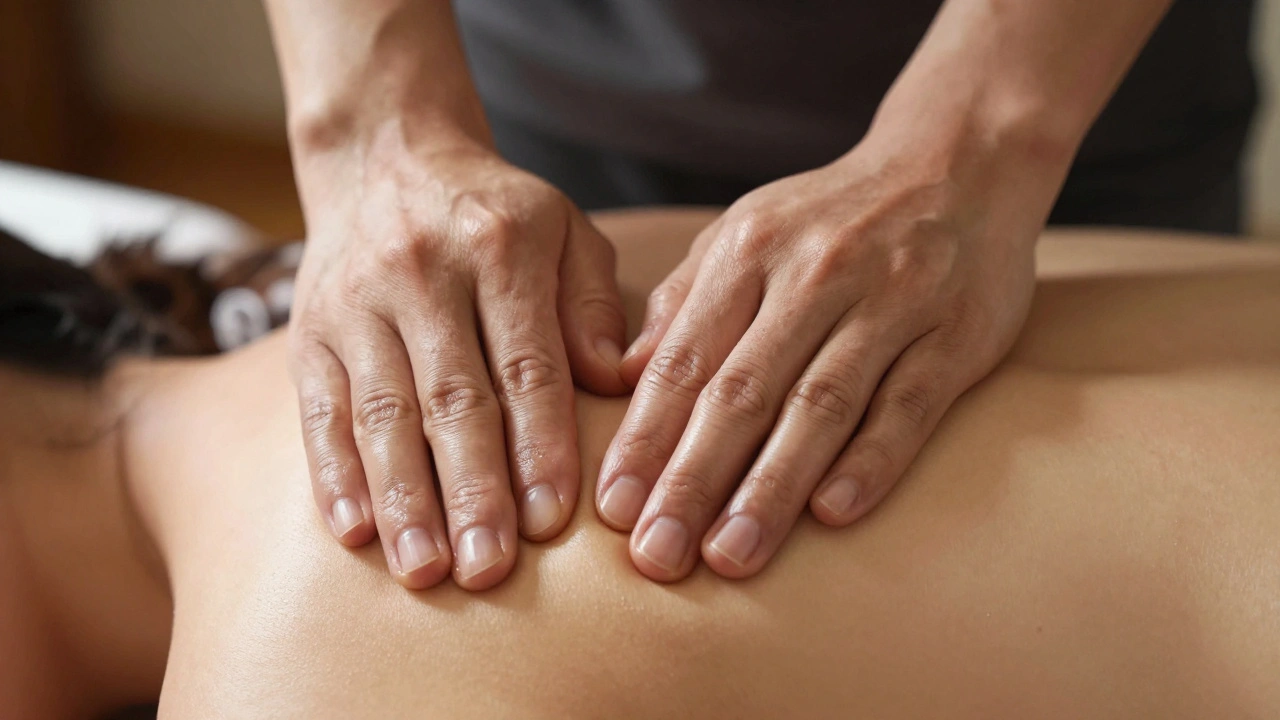
At its heart, massage therapy is about three things: touch, timing, and intention. Touch isn’t just pressure-it’s the quality of contact. A great therapist adjusts their hands from light feathering to deep, sustained pressure based on what your body tells them. Timing matters too. Rushing through a session defeats the purpose. Great therapists move with rhythm, giving your muscles time to release. And intention? That’s the invisible part. It’s the therapist’s focus, their awareness of your breathing, their ability to read tension without you saying a thing. These aren’t skills you learn from a textbook. They’re honed through practice, feedback, and genuine care.
People often confuse massage with chiropractic care, physiotherapy, or even reflexology. While they can overlap, they’re not the same.
| Practice | Primary Focus | Key Technique |
|---|---|---|
| Massage Therapy | Soft tissue relaxation and circulation | Manual strokes (effleurage, petrissage, friction) |
| Physiotherapy | Rehabilitation and movement restoration | Exercises, joint mobilization, equipment |
| Chiropractic | Spinal alignment and nerve function | High-velocity adjustments |
| Reflexology | Pressure points on feet/hands | Thumb-walking on specific zones |
A massage therapist works with muscles, fascia, and connective tissue-not bones or nerves directly. They don’t crack your spine. They don’t prescribe exercises. Their tool is their hands, and their goal is to help your body relax and heal itself.
Almost everyone. Athletes use it to recover faster. Office workers relieve neck and shoulder tension. New parents find relief from sleep-deprivation aches. People with anxiety report calmer minds after sessions. Even those without pain benefit-massage lowers stress hormones and boosts feel-good chemicals like serotonin. You don’t need a diagnosis to deserve good touch. If you carry tension in your body, you’re a candidate.
Stress isn’t just in your head-it lives in your shoulders, your jaw, your lower back. A skilled therapist helps your nervous system shift from fight-or-flight to rest-and-digest. Studies show massage lowers cortisol, the body’s main stress hormone, by up to 30% after a single session. That’s not magic. It’s physiology. The slow, rhythmic pressure signals safety to your brain. You start breathing deeper. Your heart rate slows. Your muscles soften. That’s the quiet power of a great therapist: they don’t just touch you-they help you unwind from the inside out.
Think of your muscles like ropes. When they’re tight, they pull on joints, limit movement, and cause discomfort. A great therapist doesn’t just rub them-they help release adhesions and restore natural glide. This means better posture, easier bending, less stiffness in the morning. For people with desk jobs or repetitive strain, this isn’t luxury-it’s maintenance. One client I know, a graphic designer, went from needing painkillers every Friday to feeling like she could finally reach her top shelf again.
Touch is deeply human. In a world full of screens and silence, being held-gently, safely, without judgment-can be healing. Many people cry during their first deep tissue session, not because it hurts, but because they finally let go. A great therapist creates space for that. They don’t push you to talk, but they make it safe to feel. This emotional release isn’t side effect-it’s part of the therapy. It’s why so many say they leave feeling lighter, not just looser.
Great massage isn’t just for spas. It’s used in hospitals for burn recovery, in palliative care for comfort, and in sports teams for performance. At home, regular sessions can reduce doctor visits, cut down on pain meds, and improve sleep. One 2023 survey of over 1,200 UK adults found that those who received monthly massage reported 40% fewer headaches and better sleep quality than those who didn’t. That’s not a fluke. It’s a pattern.
| Benefit | Description | Impact |
|---|---|---|
| Improved Sleep | Reduces muscle tension and calms the nervous system | Deeper, more restful cycles |
| Reduced Headaches | Relieves neck and shoulder tension that triggers tension headaches | Fewer episodes, less medication needed |
| Better Mobility | Loosens stiff joints and connective tissue | Easier daily movement |
| Lower Stress Levels | Decreases cortisol, increases serotonin | Improved mood and focus |
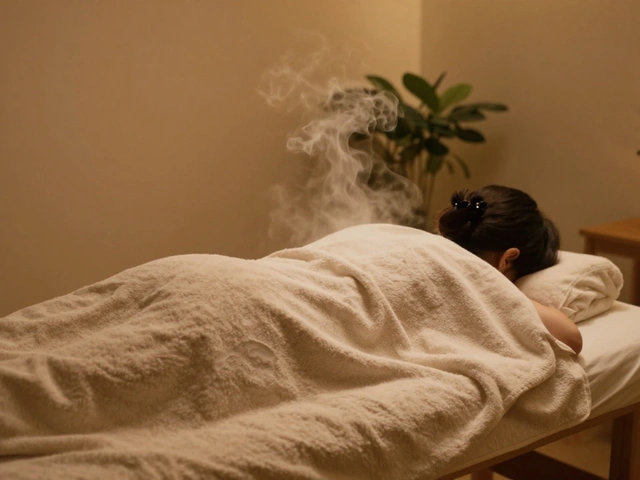
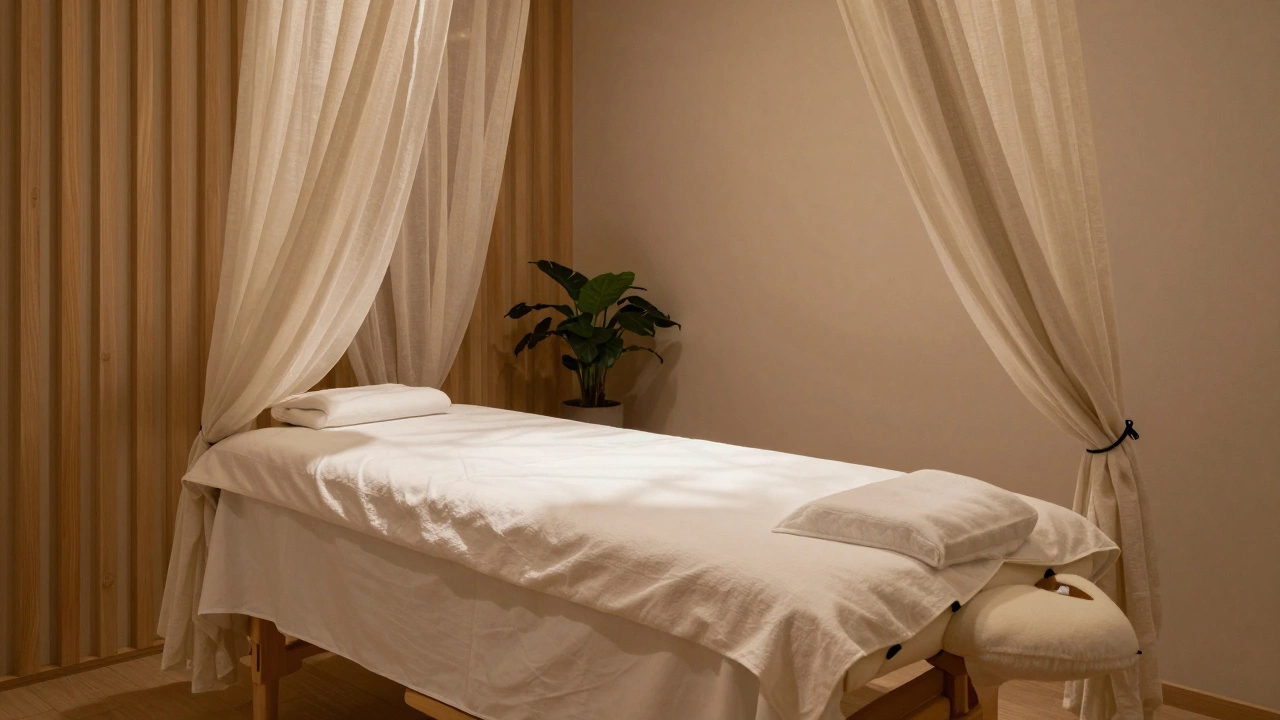
A great session starts before you even lie down. The room should feel calm-not overly perfumed, not too cold or hot. Soft lighting, clean linens, and quiet music (if any) set the tone. You shouldn’t feel like you’re in a waiting room with a massage table tacked on. The space should feel intentional. In London, many therapists work out of small, private clinics or even home studios. What matters isn’t the size-it’s the cleanliness and the sense of safety. If the room feels cluttered or the towels smell like detergent, that’s a red flag.
Most sessions follow a simple flow: consultation, draping, massage, and integration. The therapist will ask about your goals, injuries, and preferences. Then they’ll leave the room so you can get comfortable under the sheet. Only the area being worked on is exposed. They’ll use oil or lotion to reduce friction. Then comes the massage-starting with lighter strokes to warm the tissue, then moving deeper as needed. The session ends with slow, soothing strokes to help your body settle. You’re not meant to fall asleep (though many do), but you should feel calm, not drained.
No two bodies are the same. A great therapist doesn’t use a one-size-fits-all routine. They adjust pressure, speed, and technique based on your feedback. Maybe you need more focus on your lower back. Maybe you’re pregnant and need modified positions. Maybe you’re sensitive to scent and prefer unscented oil. A good therapist will ask, listen, and adapt. They don’t push their style-they serve yours.
Don’t be shy. Tell them if you’re sore from a workout, if you’ve had surgery, if you’re feeling anxious. Even if you think it’s irrelevant, it matters. A therapist needs to know if you’re on blood thinners, have a skin condition, or just had a bad day. Preparation is simple: drink water before, avoid heavy meals, and wear comfortable clothes to and from. No need to shave or scrub-just show up as you are.
Start by thinking about your goals. Are you seeking pain relief? Stress relief? Recovery? That’ll guide your choice. Then look for therapists who specialize in what you need. Don’t just pick the cheapest option. A £30 session might leave you worse off than a £65 one that actually works. Check their website. Do they explain their approach? Do they mention training? Are they registered with a professional body like the Complementary and Natural Healthcare Council (CNHC) or the Federation of Holistic Therapists (FHT)?
Look for credentials, not just certifications. A 10-hour online course isn’t the same as a 1,200-hour diploma. Ask where they trained. Did they study anatomy, physiology, pathology? Do they continue learning? Great therapists do. Also, read reviews-not just star ratings, but the details. Does someone mention how the therapist listened? Did they adjust the pressure? Did they remember your name? Those are the signs of quality.
It’s normal to feel nervous. Most people do. Remember: you’re in control. You can ask for more or less pressure at any time. You can stop the session if something feels wrong. You don’t have to talk. You don’t have to be perfect. This is your time. And if you’re unsure, ask for a consultation first. Many therapists offer a free 10-minute chat to see if you’re a good match.
Look for formal training-usually a diploma or degree in massage therapy, not just a weekend course. In the UK, registration with the CNHC or FHT means they’ve met national standards for ethics, hygiene, and competency. They should be able to show you proof of insurance and ongoing training. Avoid anyone who only says they’re “certified” without naming a reputable school or body. A great therapist is proud of their training and happy to share it.
Experience alone doesn’t guarantee skill. A skilled therapist listens more than they talk. They notice subtle changes in your muscle tension without you telling them. They adjust pressure based on your breathing, not a timer. They don’t use the same routine on everyone. If you leave feeling like they “did a job” rather than “tended to you,” they’re not skilled yet. The best therapists make you feel seen, not serviced.
No. Deep tissue isn’t about pain-it’s about precision. If you’re not dealing with chronic muscle knots or injury, deep pressure can do more harm than good. A great therapist matches the technique to your needs. Someone with fibromyalgia might need light, rhythmic strokes. An athlete might need deeper work. The goal isn’t to hurt you into relief-it’s to help your body release tension naturally. Ask for a blend if you’re unsure.
Yes-but not as a cure. Massage therapy helps manage chronic pain by reducing muscle guarding, improving circulation, and calming the nervous system. It won’t fix a herniated disc, but it can reduce the secondary tension that makes it worse. Many pain clinics now include massage as part of a multidisciplinary approach. Always consult your doctor first, especially if you have conditions like osteoporosis, blood clots, or recent surgery.
Always verify credentials. In the UK, anyone can call themselves a massage therapist-even without training. That’s why registration with CNHC or FHT matters. These bodies require proof of education, insurance, and adherence to ethical codes. You can check their public registers online. If a therapist refuses to show you their credentials, walk away.
| Practice | Purpose | Example |
|---|---|---|
| Sanitizing surfaces | Prevent infection | Disinfecting tables and linens between clients |
| Proper draping | Ensure privacy and comfort | Only exposing the area being worked on |
| Consent checks | Respect boundaries | Asking, “Is this pressure okay?” during the session |
You own your body. Always. A great therapist will never touch you without asking. They’ll check in before starting, during, and after. If they make you feel uncomfortable-whether by talking too much, touching inappropriate areas, or ignoring your requests-stop. You have the right to leave. No apology needed. Your comfort is non-negotiable.
Massage isn’t for everyone. Avoid it if you have: fever, open wounds, recent fractures, blood clots, or severe osteoporosis. If you’re pregnant, make sure they’re trained in prenatal massage. Always tell your therapist about medications, recent surgeries, or chronic conditions. It’s not just polite-it’s essential for safety.

Pair massage with breathwork, gentle stretching, or even a warm bath afterward. These help your body stay in relaxation mode. Some therapists offer guided breathing at the end-ask if they do. Mindfulness apps or quiet music at home can extend the calm. Don’t rush back into your day. Give yourself 15 minutes to just be.
Massage is personal. You don’t need a partner to benefit. But if you and a loved one want to try it together, many studios offer side-by-side sessions. Just make sure you both have similar goals. Two people with different needs might not get the most from a shared session.
At home, foam rollers or massage balls can help between sessions. But they’re not replacements. A therapist’s hands are trained to feel what’s going on under the skin. Tools are for maintenance, not healing. Use them wisely-don’t roll over joints or bones.
Like exercise, massage works best with consistency. Monthly sessions are ideal for maintenance. Weekly might help if you’re recovering or under high stress. Don’t wait until you’re in agony. Prevention is easier-and cheaper-than repair.
Use the CNHC or FHT directories to find registered therapists near you. Google reviews can help, but look for patterns: “listened well,” “adjusted pressure,” “made me feel safe.” Avoid places with only generic 5-star reviews. Ask friends or your GP for recommendations. Word of mouth still works.
The Massage Therapy Foundation and the British Association of Massage Therapists offer free resources. Reddit’s r/massagetherapy has honest discussions. YouTube channels like “The Massage Therapist” provide educational content-not ads.
In the UK, massage therapy is regulated by professional bodies, not the government. That means anyone can open a clinic. But registered therapists follow strict codes of conduct. Be wary of places offering “romantic massage” or “sensual touch”-those are not legitimate therapies. Stick to professionals who treat massage as healthcare, not entertainment.
Books like “The Language of Touch” by David L. Simons or “Myofascial Release” by John Barnes offer deep insight. Online courses from accredited schools (like the London School of Massage) can help if you’re curious about the science.
A great massage therapist doesn’t just fix aches. They help you reconnect with your body. In a world that’s always pushing, pulling, and demanding, that’s rare. They give you back your calm, your mobility, your peace. That’s not a luxury. It’s a necessity.
Don’t rush into your first session. Choose someone who listens. Ask questions. Trust your instincts. And if you don’t feel better after a few sessions, try someone else. It’s not you-it’s the fit.
Tried a massage therapist who changed your life? Share your story. You never know who needs to hear it. And if you’re looking for more tips on wellness in London, follow along-there’s more where this came from.
Some links may be affiliate links, but all recommendations are based on research and quality.
Word count: 1,723