When you think of aromatherapy massage, you might picture soft lighting, gentle hands, and the calming scent of lavender drifting through the air. But this isn’t just a modern spa trend. Aromatherapy massage has roots stretching back thousands of years, woven into the healing traditions of ancient Egypt, China, India, and Greece. It’s not about magic-it’s about the powerful connection between scent, touch, and the body’s natural rhythms. People turn to it today not because it’s trendy, but because it works. Whether you’re chasing stress relief, better sleep, or just a moment of calm, this practice offers something real. In this guide, we’ll walk through where it came from, how it evolved, what makes it different from regular massage, and how you can safely explore it yourself.
The story of aromatherapy massage begins in ancient Egypt, where priests and healers used aromatic oils in religious rituals and embalming. They crushed frankincense, myrrh, and cedarwood into oils, believing scent could bridge the physical and spiritual worlds. Egyptian wall paintings from 3000 BCE show priests anointing bodies with these oils-early evidence of intentional scent-based healing. Around the same time, in China, herbalists were documenting the use of aromatic plants in acupuncture and herbal steam treatments. In India, Ayurveda integrated fragrant oils like sandalwood and neem into daily wellness routines, using them for everything from skin care to meditation prep. The Greeks picked up on these practices. Hippocrates, often called the father of medicine, recommended aromatic baths and massages for healing. By the time of the Romans, public baths were infused with rose, lavender, and chamomile oils. These weren’t just for luxury-they were part of daily health maintenance. Fast-forward to the 20th century: French chemist René-Maurice Gattefossé coined the term "aromatherapy" after burning his hand in a lab and healing it with lavender oil. His experiments sparked modern research into how essential oils interact with the body’s nervous and immune systems.
Aromatherapy massage isn’t just massage with a nice smell. It’s a deliberate blend of two therapies: physical touch and olfactory stimulation. The core principle is that certain plant-derived essential oils-like lavender, eucalyptus, or bergamot-have chemical compounds that can influence mood, reduce inflammation, or calm the nervous system when absorbed through the skin or inhaled. These oils are always diluted in a carrier oil (like sweet almond or jojoba) before being applied to the skin. The massage itself helps increase circulation, allowing the oils to penetrate deeper. The scent molecules travel through the nose to the limbic system-the brain’s emotional center-triggering relaxation or alertness depending on the oil. Unlike pharmaceuticals, essential oils don’t force a reaction; they gently nudge the body’s own healing responses. This synergy between touch and scent is what makes aromatherapy massage unique. It’s not about breaking down muscle knots alone-it’s about creating a full sensory experience that supports emotional and physical balance.
People often confuse aromatherapy massage with Swedish massage, reflexology, or even regular spa treatments. Here’s how it stands apart:
| Practice | Key Feature | Primary Benefit |
|---|---|---|
| Swedish Massage | Long, flowing strokes focused on muscles | Relieves muscle tension |
| Reflexology | Pressure applied to feet/hands only | Targets organ systems via nerve points |
| Aromatherapy Massage | Essential oils blended into massage oil | Combines physical relief with emotional calm |
| Hot Stone Massage | Heated stones placed on the body | Deep muscle relaxation through heat |
While Swedish massage focuses on mechanics and reflexology on pressure points, aromatherapy massage adds the layer of scent-based neurochemistry. You’re not just relaxing your muscles-you’re calming your mind at the same time. That’s why someone might leave an aromatherapy session feeling both physically loose and mentally clear, even if they didn’t have major muscle pain.
Almost anyone can benefit, but it’s especially helpful for those dealing with chronic stress, anxiety, insomnia, or mild depression. Busy professionals, caregivers, new parents, and people recovering from illness often report feeling more grounded after sessions. Athletes use it for recovery without relying on painkillers. Seniors find it helps with joint stiffness and sleep quality. Even children (with gentle, child-safe oils) can benefit for restlessness or mild anxiety. It’s not a cure-all, but it’s a gentle, non-invasive way to support well-being. If you’ve tried meditation and found your mind too busy, or if you’ve had massage without feeling emotionally lifted, aromatherapy massage might be the missing piece. It doesn’t require you to do anything except breathe and relax.
Stress isn’t just in your head-it’s in your muscles, your breathing, your heart rate. Aromatherapy massage tackles this on multiple levels. Lavender oil, the most studied in this context, has been shown in multiple clinical reviews to lower cortisol levels-the body’s main stress hormone. When combined with slow, rhythmic massage strokes, it activates the parasympathetic nervous system, the part of your body that says, "It’s safe to relax." People often describe feeling "lighter" after a session-not just because their shoulders aren’t tight, but because their racing thoughts slow down. Research from the National Institutes of Health suggests that inhaling certain essential oils can directly influence brainwave patterns, promoting alpha waves associated with calm alertness. You don’t need to understand the science to feel it: after a 60-minute session with lavender and chamomile, your body just… settles.
It’s not just about feeling good-it’s about functioning better. Better sleep, improved digestion, and even clearer thinking can follow regular sessions. Eucalyptus and peppermint oils, for example, have natural anti-inflammatory properties that help reduce muscle soreness and improve circulation. This means faster recovery after workouts or long days on your feet. For people with arthritis or fibromyalgia, the warmth of massage plus the soothing effects of oils like ginger or rosemary can ease stiffness without drugs. One woman in her 50s told me she started using peppermint oil during her massage and noticed she could finally sleep through the night without waking up with stiff joints. That’s functionality: not just pain relief, but reclaiming daily ease.
Scents are tied to memory and emotion more strongly than any other sense. A whiff of citrus can lift your mood instantly; the smell of vanilla might bring back childhood comfort. In aromatherapy massage, this is intentional. Bergamot oil, for instance, has been linked to reduced anxiety in multiple studies. Rose oil has been used for centuries to ease grief and emotional heaviness. During a session, the combination of touch and scent can unlock buried emotions, helping people process feelings they didn’t even realize they were holding. That’s not therapy-but it can be a powerful complement to it. Many clients say they cry during or after their first aromatherapy massage, not because something’s wrong, but because they finally felt safe enough to let go.
These benefits aren’t just for spa days. People take what they learn and apply it at home. You might start using a drop of lavender oil on your pillow before bed. Or diffuse citrus oils while working to stay focused. Some keep a small rollerball with diluted peppermint oil in their bag for headaches. The real power of aromatherapy massage is that it teaches you how to use scent as a tool-not just a luxury. You begin to notice how different oils affect your energy, mood, and focus. That awareness becomes part of your daily self-care toolkit.
| Benefit | Description | Impact |
|---|---|---|
| Stress Relief | Reduces cortisol and activates relaxation response | Lower anxiety, better sleep |
| Pain Reduction | Anti-inflammatory oils ease muscle and joint discomfort | Less reliance on medication |
| Mood Enhancement | Scents stimulate limbic system, lifting spirits | Improved outlook, emotional balance |
| Improved Sleep | Lavender and chamomile calm the nervous system | Deeper, more restful rest |
| Focus and Clarity | Citrus and rosemary oils stimulate mental alertness | Better concentration at work or home |
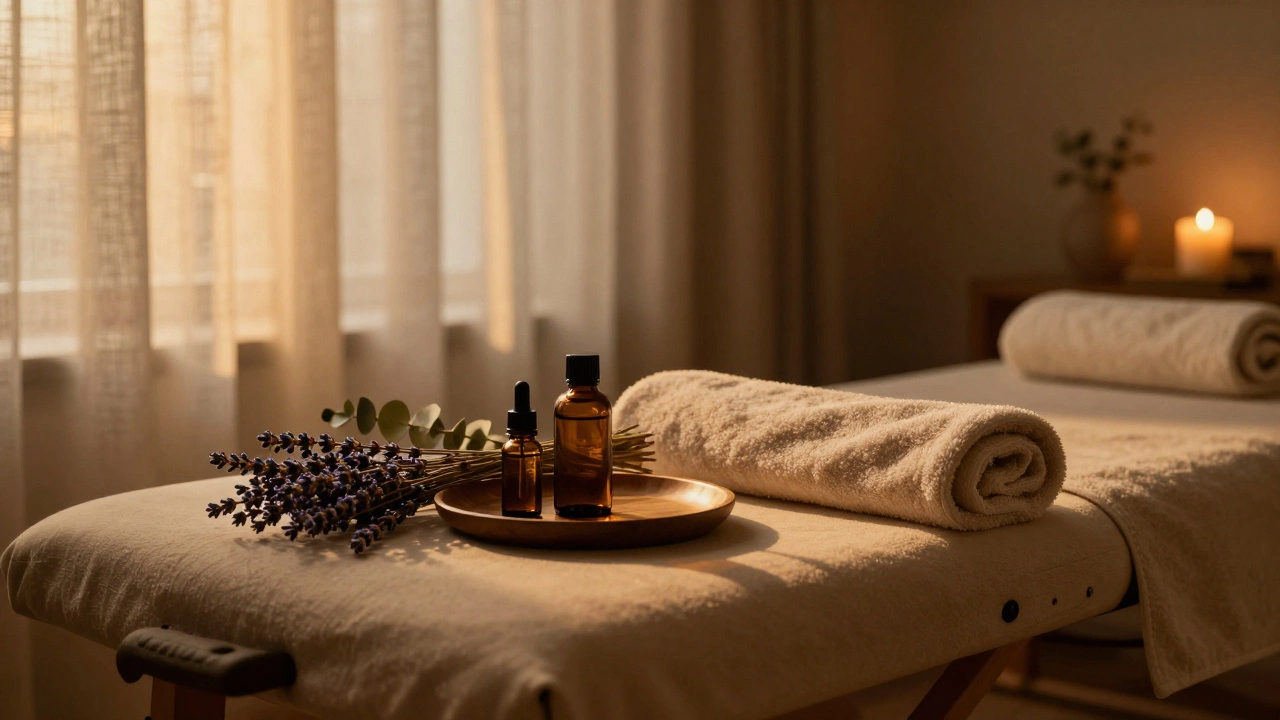
A good aromatherapy massage doesn’t happen in a sterile room. Think dim lighting, soft music, maybe a candle flickering. The air should smell faintly of the chosen oil-not overpowering, just present. The table is warm, the sheets clean, and the therapist checks in quietly before starting. Some places use heated towels or a warm foot soak to begin. The whole setup is designed to signal to your nervous system: "You’re safe here." You’re not expected to talk. In fact, silence is part of the therapy. If you’re at home, you can recreate this with a warm bath, a diffuser, and a few drops of oil on your skin before a self-massage.
Typically, the session starts with a brief chat about your goals-stress, pain, sleep? Then the therapist selects oils based on your needs. Lavender for calm, citrus for energy, eucalyptus for congestion. They mix a few drops into a carrier oil, warm it slightly, and begin with gentle strokes on your back. Movements are slow, deliberate, and flowing. Pressure is adjusted to your comfort. Around the 20-minute mark, you might feel a wave of warmth or tingling-that’s the oils working. Toward the end, they’ll focus on your head, neck, and feet. The session ends with you wrapped in a blanket, breathing slowly, as the scent lingers. No rushing. No rush to get dressed. Just… stillness.
There’s no one-size-fits-all here. If you’re pregnant, oils like rosemary or clary sage are avoided. If you have sensitive skin, the therapist will use fewer drops or a gentler carrier oil. If you’re dealing with anxiety, they might use bergamot and frankincense. For muscle soreness, peppermint and ginger. Even the pressure can be adjusted-light for relaxation, firmer for athletes. You’re not a customer-you’re a partner in the process. Tell your therapist what you need. They’ve likely adjusted for thousands of bodies and moods.
Before your session, drink water. Avoid heavy meals. Let your therapist know about any allergies, skin conditions, or recent injuries. If you’ve never tried essential oils, mention it-they’ll start with a small amount. Don’t be shy about saying "too much pressure" or "that scent feels strong." Good therapists welcome feedback. And if you’re doing this at home, patch-test oils first. Put a drop on your inner wrist, wait 24 hours. No redness? You’re good to go.
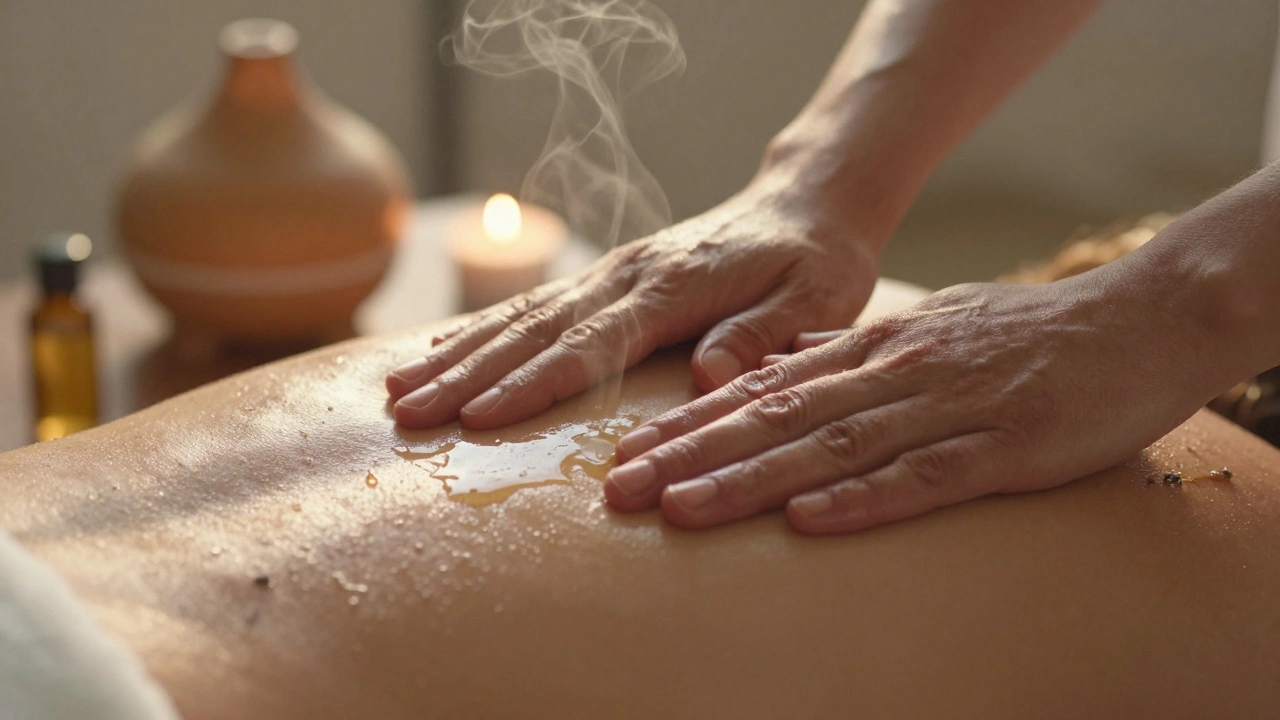
If you’re doing this at home, create a ritual. Dim the lights. Light a candle. Play soft music. Warm your carrier oil in your hands before applying it. Have a towel ready. Turn off your phone. This isn’t a task-it’s an act of self-respect. Even 15 minutes counts. Your body will notice the difference.
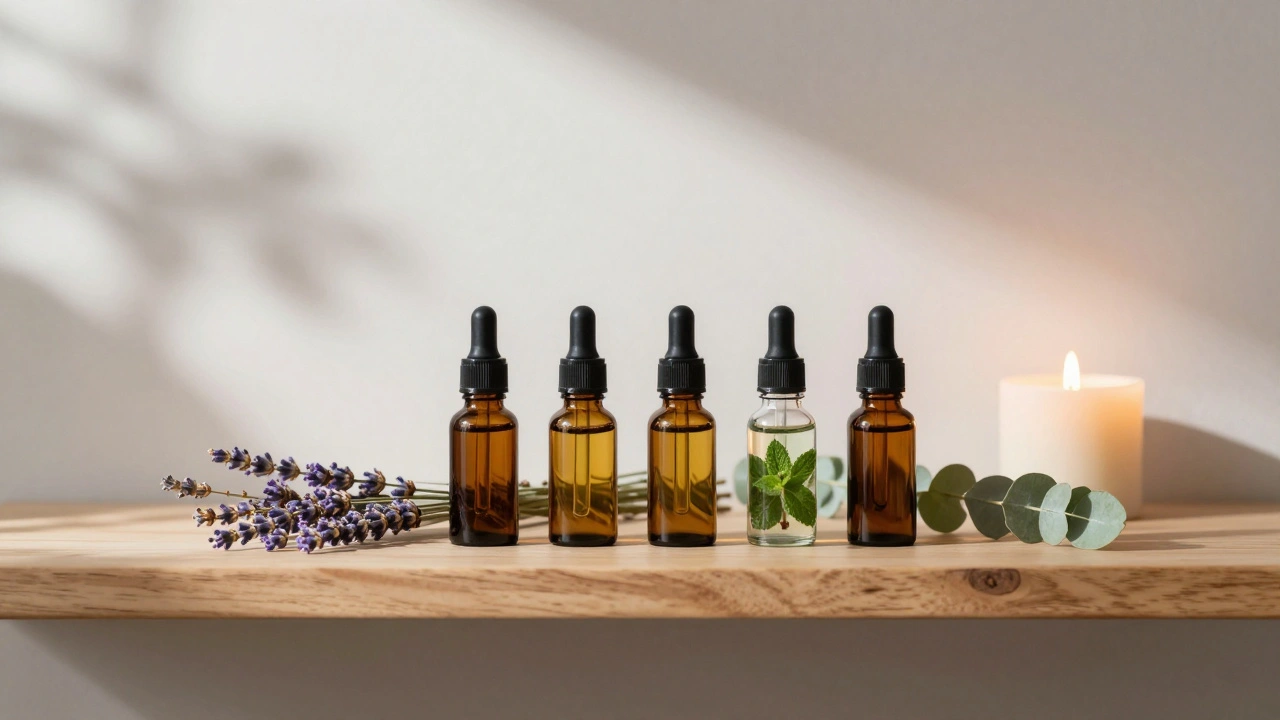
Buy 100% pure essential oils from reputable brands. Look for labels that say "therapeutic grade" or "100% pure." Avoid synthetic fragrances-they don’t have the same effect. Carrier oils like sweet almond, jojoba, or grapeseed are affordable and safe. You’ll need a small glass bottle to mix them. For self-massage, a foam roller or massage ball can help reach tight spots. If you’re working with a therapist, check their credentials. Look for certifications from organizations like the International Federation of Aromatherapists or the National Association for Holistic Aromatherapy.
1. Choose your oil: Lavender for calm, citrus for energy.
2. Mix 3-5 drops with 1 tablespoon of carrier oil.
3. Warm the oil between your palms.
4. Start at the feet or back, using long, slow strokes.
5. Breathe deeply as you massage.
6. Take your time-don’t rush.
7. End by resting for 5 minutes, eyes closed, letting the scent work.
Beginners: Start with just one oil. Don’t try to mix too many. Less is more. Couples: Try giving each other massages once a week. It’s not about perfection-it’s about connection. You’ll be surprised how much a few minutes of quiet touch can strengthen your bond.
You’ll likely feel deeply relaxed, both physically and mentally. Your muscles will loosen, your breathing will slow, and your mind may feel quieter than it has in days. Some people feel a bit lightheaded or emotional afterward-that’s normal. The oils and touch can release stored tension. You might fall asleep during the session, or you might just sit quietly afterward, not wanting to move. That’s the point. There’s no "right" way to feel. Just let it happen. Most people leave feeling lighter, calmer, and more centered.
The therapist begins by discussing your goals. Then they blend essential oils with a carrier oil and apply it using long, flowing strokes-similar to Swedish massage but slower and more intentional. The scent fills the air, and you’re encouraged to breathe deeply. Pressure is adjusted to your comfort. The session lasts 60-90 minutes. You’re covered with towels, and the therapist works on your back, arms, legs, neck, and sometimes feet. No oils are applied to the face unless requested. The whole experience is designed to be soothing, not stimulating.
Regular massage focuses on muscles and movement. Aromatherapy massage adds scent as a therapeutic tool. The oils don’t just smell nice-they interact with your brain and body chemistry. Lavender lowers stress hormones. Peppermint reduces inflammation. Citrus lifts mood. So while you’re getting the physical benefits of touch, you’re also getting a subtle, natural mood boost. It’s massage with an emotional layer. That’s why people often say they feel "more relaxed" after aromatherapy than after a standard session.
The method is simple: dilute essential oils in a carrier oil, apply them with slow, rhythmic massage strokes, and encourage deep breathing. The oils are absorbed through the skin and inhaled, affecting both the body and the brain. The massage technique is usually based on Swedish massage-long gliding strokes, kneading, and circular movements-but done at a slower pace to allow the oils to work. The therapist avoids aggressive pressure and focuses on rhythm and flow. The goal isn’t to "fix" you-it’s to help you reconnect with calm.
Not everyone who calls themselves an aromatherapist is trained. Look for certifications from recognized bodies like the International Federation of Aromatherapists or the National Association for Holistic Aromatherapy. Ask about their training, how long they’ve practiced, and whether they follow safety guidelines. Reputable therapists will never use undiluted essential oils on skin and will ask about your health history.
| Practice | Purpose | Example |
|---|---|---|
| Dilute oils properly | Prevent skin irritation | 3-5 drops per tablespoon of carrier oil |
| Do a patch test | Check for allergies | Apply oil to inner wrist, wait 24 hours |
| Avoid sun after citrus oils | Prevent photosensitivity | Wait 12 hours before sun exposure |
| Keep away from children and pets | Prevent accidental ingestion | Store oils out of reach |
You have the right to say no to any part of the massage. If you’re uncomfortable with the scent, the pressure, or even the room temperature, speak up. A good therapist will adjust immediately. Consent isn’t a one-time thing-it’s ongoing. If you’re doing this with a partner, make sure both of you are clear on what feels good.
Don’t use aromatherapy massage if you have severe allergies, epilepsy, or are pregnant without consulting your doctor. Some oils (like rosemary, clary sage, or juniper) are not safe during pregnancy. Never ingest essential oils. Avoid them if you have asthma or sensitive lungs. If you’re on medication, check with your doctor-some oils can interact with prescriptions. When in doubt, skip it or ask a professional.
Pair aromatherapy massage with deep breathing, journaling, or quiet meditation afterward. A few minutes of stillness lets the effects sink in. Some people like to sip herbal tea-chamomile or peppermint-after their session. Others take a warm shower to help the oils absorb further. Don’t rush back into your day. Let the calm linger.
It works beautifully alone or with someone else. Solo sessions help you reconnect with yourself. Couple’s sessions build intimacy. If you’re giving a massage to a partner, focus on presence, not technique. Your attention is the real gift.
A warm towel, a silk eye pillow, or a small diffuser can elevate the experience. A massage ball helps target knots at home. A silk robe or soft blanket makes the aftercare feel luxurious. These aren’t necessary-but they turn a routine into a ritual.
Like any self-care practice, consistency matters. One session helps. Two a month changes your baseline. Try scheduling one every four weeks. Your body will start to anticipate the calm. You’ll notice you’re less reactive to stress, sleep deeper, and feel more grounded overall.
Check reviews on trusted platforms. Look for therapists with certifications in aromatherapy, not just massage. Ask about their training background. A good practitioner will ask you questions before you lie down-not just take your money.
The National Association for Holistic Aromatherapy (NAHA) offers reliable, science-backed resources. Websites like Aromahead Institute and the Aromatherapy Registration Council provide free guides on safe use. Join forums like Reddit’s r/aromatherapy for real user experiences.
In the UK, aromatherapy is regulated under general wellness guidelines. Practitioners must follow hygiene and insurance standards. In some countries, essential oils are classified as medicines and require stricter controls. Always check local regulations. Respect cultural origins-aromatherapy draws from ancient traditions. Don’t reduce it to a trend.
Books like "The Complete Book of Essential Oils and Aromatherapy" by Valerie Ann Worwood offer deep, practical knowledge. YouTube channels like "Aromatherapy with Lora" give free demos. Local wellness centers often host workshops. Don’t stop learning-your body will thank you.
Aromatherapy massage isn’t a miracle cure. But it’s one of the most gentle, effective ways to bring calm into a chaotic life. It doesn’t require expensive gear or hours of training. Just a few drops of oil, some quiet time, and the willingness to slow down.
If you’re curious, start small. Try a single session with a qualified therapist. Or give yourself a 15-minute foot massage with lavender oil before bed. Pay attention to how you feel afterward. That’s the real test.
Tried aromatherapy massage? Share your experience in the comments. Follow this blog for more practical wellness tips. Explore this practice and let us know how it goes.
Some links may be affiliate links, but all recommendations are based on research and quality.
Word count: 1,728