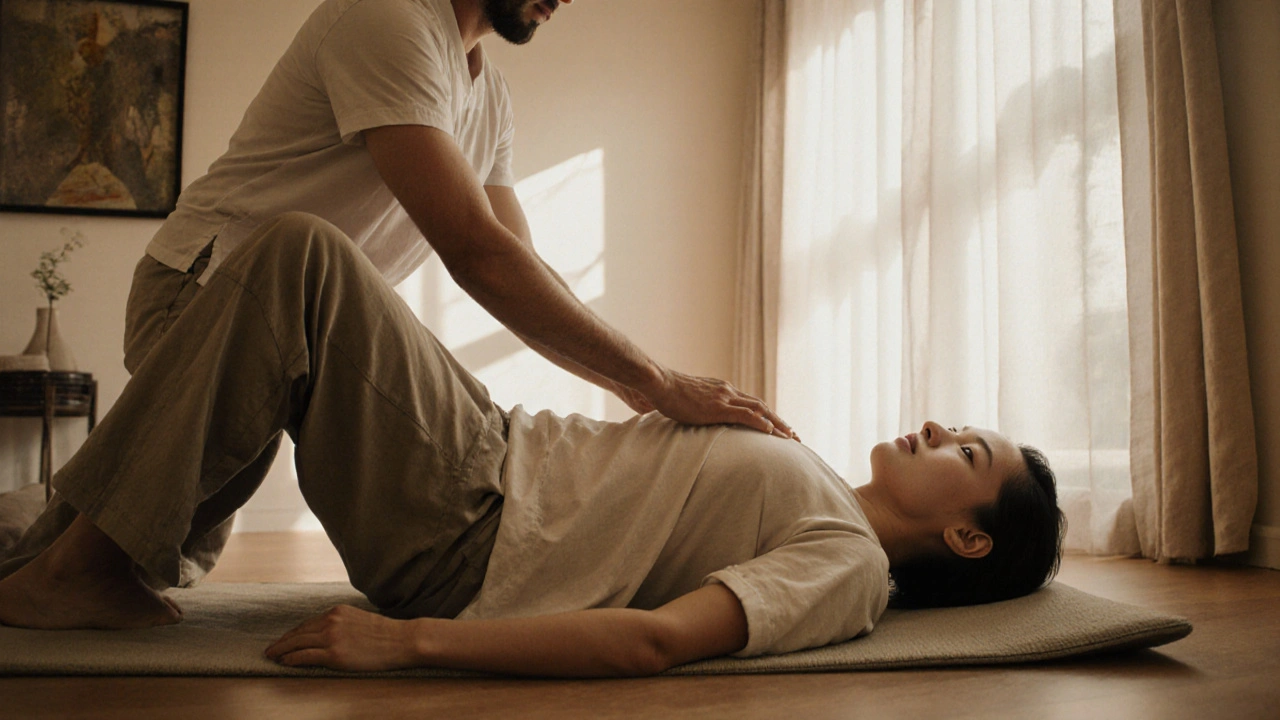
Thai massage is more than just a bodywork session-it’s a full-sensory experience that blends movement, breath, and touch to restore balance. Unlike other massages that focus on kneading muscles, Thai massage works like a living yoga session: you lie still while the practitioner guides your body through stretches, applies rhythmic pressure along energy lines, and uses their hands, elbows, knees, and feet to create deep, flowing release. It’s not just about relaxation-it’s about realignment. If you’ve ever walked out of a session feeling taller, lighter, and strangely calm, you’ve felt its effect.
Thai massage traces its roots over 2,500 years to the teachings of Shivago Komarpaj, a healer and physician believed to have been the personal doctor of the Buddha. Rooted in ancient Indian Ayurveda, Chinese meridian theory, and Buddhist spiritual practices, it evolved in Thailand as a healing art practiced in temples. Monks preserved and refined the techniques over centuries, passing them down orally and through hands-on training. Unlike Western massage, which often separates physical therapy from spirituality, Thai massage treats the body, mind, and energy as one system. Today, it’s recognized by UNESCO as an Intangible Cultural Heritage, not just as a therapy, but as a living tradition.
At its heart, Thai massage works on the body’s energy lines, called sen lines-similar to meridians in acupuncture. There are ten main sen lines, but practitioners focus most on four: Sen Sumana (center line), Sen Ittha (head to toe), Sen Kalathari (side body), and Sen Thawara (back). Pressure is applied along these lines using thumb, palm, elbow, knee, and foot. The session also includes passive yoga-like stretches: rocking, twisting, and lengthening movements that open joints and release tension without you having to lift a finger. Breathing is synchronized throughout-deep, slow breaths help the body relax into each stretch. No oils are used. You wear loose, comfortable clothing, and the session takes place on a padded mat on the floor.
Many people confuse Thai massage with Swedish or deep tissue massage. Here’s how they’re different:
| Practice | Key Feature | Primary Benefit |
|---|---|---|
| Thai Massage | Passive stretching + pressure along energy lines | Improved flexibility, energy flow, and whole-body balance |
| Swedish Massage | Long strokes, kneading with oils | Surface-level relaxation and circulation |
| Deep Tissue Massage | Intense pressure on chronic muscle knots | Relief from specific muscle tension |
| Shiatsu | Finger pressure on acupressure points | Stimulates internal organs and nervous system |
Thai massage isn’t just for athletes or yoga enthusiasts. It helps desk workers who sit all day by opening the hips and releasing tight shoulders. It supports people with chronic stress by calming the nervous system. Seniors find it gentle yet effective for maintaining mobility. Even those with mild anxiety report feeling more grounded after a session. It’s not for everyone-people with recent injuries, severe osteoporosis, or blood clots should avoid it-but for most adults, it’s a safe and powerful tool for daily wellness. If you’ve ever felt stiff, sluggish, or emotionally drained, Thai massage might be the reset you didn’t know you needed.
Thai massage activates the parasympathetic nervous system-the part of your body that says, “It’s safe to relax.” The rhythmic pressure and slow stretches signal your brain to lower cortisol levels, the hormone tied to stress. Studies from the National Institutes of Health suggest that regular bodywork like this can reduce perceived stress by up to 40% over time. People often describe the feeling afterward as “like a deep exhale you didn’t know you were holding.” It’s not just mental calm-it’s physical stillness. Your muscles stop gripping. Your jaw unclenches. Your breath slows. That’s the nervous system resetting itself.
Unlike stretching alone, Thai massage moves you through ranges of motion you might not reach on your own. The practitioner gently guides your limbs, using their body weight to create safe, controlled stretches. Over time, this improves joint mobility and reduces stiffness. One woman in her 60s, who struggled to tie her shoes, started weekly sessions and within three months could bend forward to touch her toes. It’s not magic-it’s consistent, guided movement that retrains your muscles and connective tissue. You don’t need to be flexible to benefit-you just need to show up.
Physical tension and emotional stress are deeply linked. When your shoulders are tight, your mind often feels heavy. Thai massage releases both. Many clients report unexpected emotional releases during sessions-tears, laughter, or sudden clarity. This isn’t coincidence. The body stores memories in tissue. As pressure opens the hips, chest, and spine, buried emotions can surface. It’s not therapy, but it creates space for emotional processing. People who feel stuck in their lives often leave sessions feeling lighter, as if a weight has been lifted.
Think of Thai massage as maintenance for your body’s operating system. If you sit at a desk, commute long distances, or care for children, your body adapts to stress. Thai massage reverses those adaptations. It helps with headaches caused by neck tension. It improves posture by releasing tight hip flexors. It aids sleep by calming the nervous system. One London office worker told me she started coming after 10 p.m. shifts-and now sleeps through the night. It’s not a cure-all, but it’s a practical, non-invasive way to keep your body running smoothly.
| Benefit | Description | Impact |
|---|---|---|
| Stress Reduction | Calms the nervous system and lowers cortisol | Improved sleep, reduced anxiety |
| Flexibility Gain | Passive stretching improves joint range | Easier movement, less pain |
| Energy Boost | Stimulates sen lines, enhancing circulation | Less fatigue, more focus |
| Posture Improvement | Releases tight muscles pulling spine out of alignment | Standing taller, less back pain |
| Emotional Release | Physical release triggers mental clarity | Greater emotional balance |
You won’t find candlelit rooms with lavender oil here. Thai massage typically happens on a firm mat on the floor, in a quiet, clean room with soft lighting. The space is warm but not hot-just enough to help muscles relax. There’s no music, or maybe just subtle ambient sounds. The focus is on your breath and the practitioner’s rhythm. You’ll be asked to wear loose, comfortable clothing-no underwear required, but modesty is respected. You’ll be covered with a light sheet during transitions. It’s not a spa-it’s a healing space.
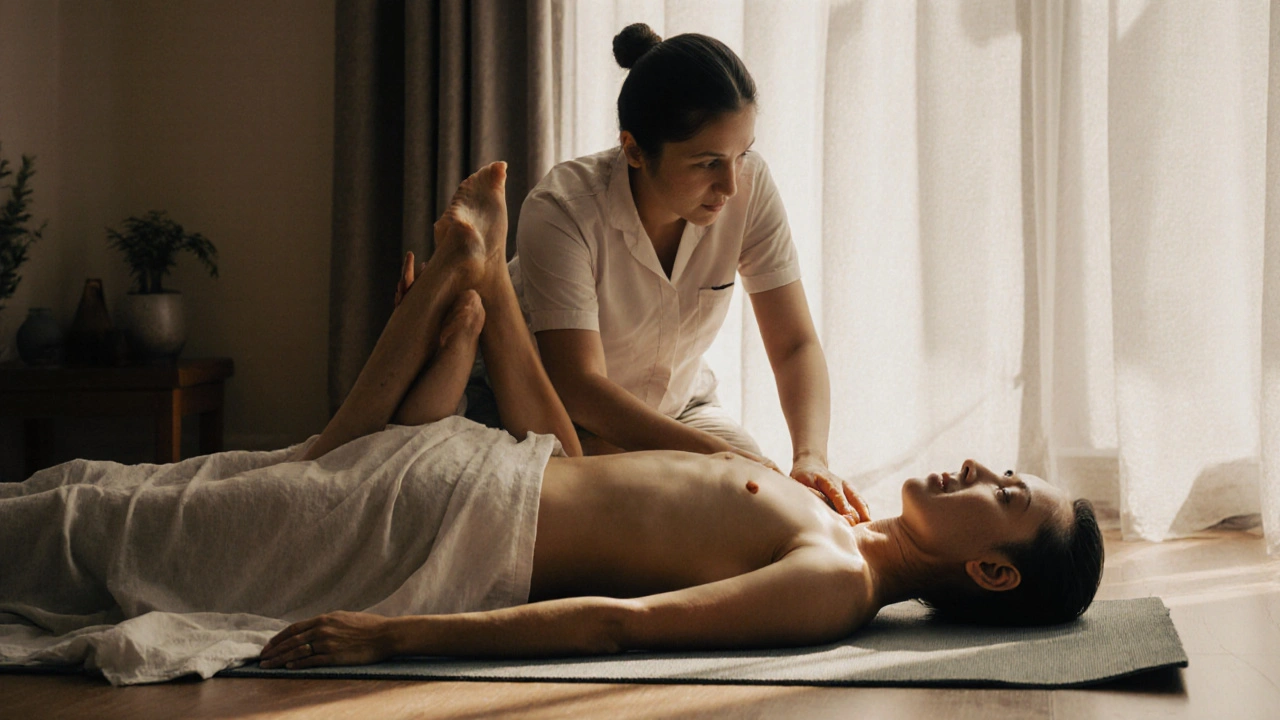
A typical 90-minute session begins with you lying on your back. The practitioner starts at your feet, using thumb pressure along the soles and toes. Then they move up your legs, gently stretching your knees and hips. You’ll be rolled onto your stomach for back and shoulder work. They’ll use their elbows to press along your spine and shoulders. Then you’ll be seated or turned onto your side for twisting stretches. The whole session flows like a dance-no sudden moves, no force. You’ll feel pressure, but not pain. If something hurts, speak up. The goal is release, not punishment.
Thai massage isn’t one-size-fits-all. If you’re recovering from an injury, the practitioner will avoid certain areas. If you’re very stiff, they’ll work slower and use less intensity. If you’re athletic, they might focus on hips and hamstrings. Some clinics offer shorter 60-minute sessions for busy schedules. Others combine Thai massage with herbal compresses or aromatherapy for deeper relaxation. Always tell your practitioner what you need. They’re trained to adapt.
Before the session, mention any injuries, recent surgeries, or conditions like high blood pressure or pregnancy. Let them know if you’re sensitive to pressure. Don’t eat a heavy meal right before-you want your body relaxed, not digesting. Drink water afterward to help flush out released toxins. Arrive 10 minutes early to settle in. Turn off your phone. This isn’t just a treatment-it’s a gift you give yourself.
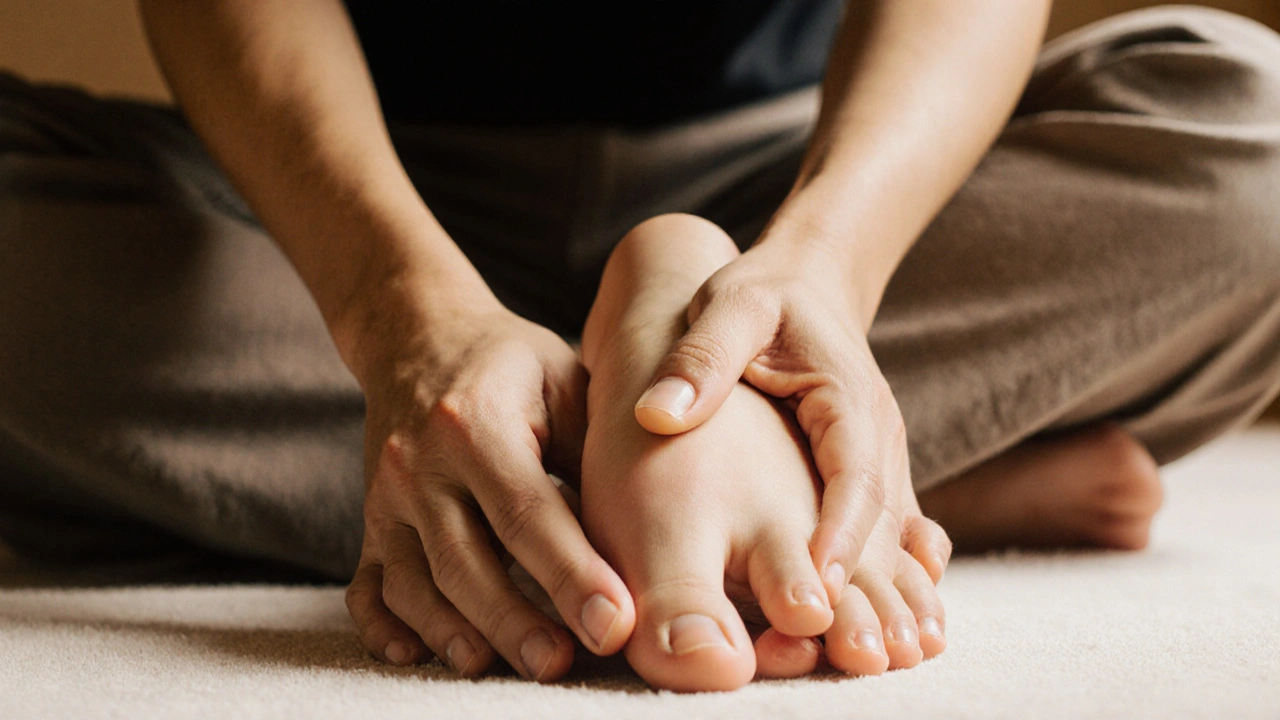
If you want to try Thai massage at home, you’ll need a flat, firm surface-a yoga mat on the floor works. Keep the room warm. Have a light blanket nearby. You’ll need someone willing to learn the basics. It’s not something you do alone. Even simple stretches, like gently pulling your knee to your chest or rotating your ankle, can help. The key is slow, mindful movement. Don’t rush. Breathe with your partner.
Look for practitioners certified by the Thai Traditional Medicine Society or trained in Wat Pho, Bangkok’s most respected school. In London, check reviews on platforms like Google or Yelp-look for consistent mentions of professionalism, cleanliness, and clear communication. Avoid places that offer “Thai massage” with oils and music-it’s likely just a Swedish massage with a Thai label. Ask if they’ve trained in Thailand or under a certified lineage.
Here’s a simple sequence you can try with a partner:
Keep it slow. Keep it gentle. It’s not about how deep you go-it’s about how present you are.
First-timers often feel awkward. That’s normal. Let go of expectations. Don’t worry if you laugh or feel silly-those moments are part of the process. Couples often find Thai massage deepens connection. It’s not romantic-it’s intimate in a quiet, grounding way. Practice together once a month. It becomes a ritual, not a chore. And remember: the best Thai massage doesn’t require fancy skills. It requires presence.
You’ll be fully clothed and lie on a mat while the practitioner moves you through stretches and applies pressure along energy lines. There’s no oil, no music, and no talking unless you initiate it. You might feel deep pressure in your hips, shoulders, or back-this isn’t pain, but a release. Some people feel sore the next day, like after a good workout. Others feel euphoric. It’s normal to feel emotional-tears, laughter, or silence are all common. You’ll leave feeling stretched, calm, and oddly energized.
A session typically lasts 60 to 90 minutes and follows a set sequence: feet, legs, back, arms, shoulders, and neck. The practitioner uses their hands, elbows, knees, and feet to apply rhythmic pressure. You’ll be guided into yoga-like poses-bent, twisted, or stretched-without lifting a muscle. Breathing is encouraged to deepen each movement. The whole session flows like a slow, guided meditation. You don’t do anything. You just receive.
Swedish massage uses oils and long, gliding strokes to relax surface muscles. Thai massage uses no oil, works through clothing, and involves active stretching and pressure along energy lines. Swedish is about relaxation. Thai massage is about realignment. One soothes the skin; the other reprograms the body. If you want to feel loose and calm, Swedish works. If you want to feel taller, freer, and more alive, Thai massage delivers.
The method is based on ancient Thai healing traditions that combine acupressure, assisted yoga, and energy line work. Practitioners apply pressure along ten main sen lines using their body weight-not just their hands. Movements are slow, rhythmic, and intentional. Breathing is synchronized with each stretch. The goal is to unblock energy, release tension, and restore balance. It’s not random-it’s a precise, inherited system passed down for centuries.
Not everyone calling themselves a Thai massage therapist is trained properly. Look for certifications from Wat Pho in Bangkok or the Thai Traditional Medicine Society. In the UK, check if they’re registered with the Complementary and Natural Healthcare Council (CNHC). Read reviews. Ask about their training. A good practitioner will explain what they’re doing and why. If they’re vague or push you into uncomfortable moves, walk away.
| Practice | Purpose | Example |
|---|---|---|
| Hygiene | Prevents infection | Practitioner washes hands, uses clean sheets |
| Consent | Respects boundaries | Asks before each stretch |
| Pressure Control | Prevents injury | Uses body weight, not force |
| Communication | Ensures comfort | Encourages feedback during session |
You own your body. Always speak up if something hurts, feels wrong, or makes you uncomfortable. A good practitioner will pause, adjust, or stop. No one should pressure you into a stretch. If you’re pregnant, have a recent injury, or are on blood thinners, tell them before the session. Your safety matters more than their technique.
Thai massage isn’t safe for everyone. Avoid it if you have: recent fractures, severe osteoporosis, deep vein thrombosis, open wounds, or acute inflammation. If you’re pregnant, wait until after the first trimester and only go to practitioners trained in prenatal Thai massage. Always consult your doctor if you have chronic conditions like heart disease or high blood pressure. It’s a powerful therapy-but not a replacement for medical care.
Pair Thai massage with mindfulness or breathwork. Take five deep breaths before and after your session. Try a short meditation in the quiet space afterward. Some people like to drink warm ginger tea or take a warm bath to extend the relaxation. Yoga, even just 10 minutes a day, helps maintain the flexibility gained during massage. Don’t rush back into your day. Let the calm settle.
Thai massage is best done with another person. But you can practice simple stretches alone-like cat-cow, seated twists, or foot rolls with a tennis ball. These mimic the pressure and movement of a session. Try doing them slowly, with awareness. It’s not the same as a professional session-but it keeps your body moving between visits.
A foam roller helps release tight calves and back muscles. A tennis ball under your foot mimics the thumb pressure used in Thai massage. A yoga strap can help with gentle stretches. These aren’t replacements-but they’re helpful allies. Keep them near your mat for daily use.
One session feels great. Two sessions a month? That’s when real change happens. Your body remembers. Muscles learn to relax. Joints regain mobility. Stress doesn’t build up as quickly. Think of it like brushing your teeth-you don’t wait until your gums bleed. Schedule it like a wellness habit, not a luxury.
Look for therapists trained in Thailand, especially at Wat Pho or Chiang Mai. In London, check directories like the CNHC or the Federation of Holistic Therapists. Read reviews for mentions of training, cleanliness, and communication. Avoid places with no credentials listed. Trust your gut-if something feels off, it probably is.
The Thai Traditional Medicine Society offers free guides on sen lines and basic techniques. YouTube has reputable channels like “Thai Massage Academy” with clear, step-by-step demos. Reddit’s r/ThaiMassage has a small but thoughtful community sharing experiences. Don’t rely on TikTok tutorials-they’re often inaccurate or unsafe.
Thai massage is protected cultural heritage. When you receive it, honor its roots. Don’t call it “Thai yoga massage” unless it’s taught that way. Avoid using it as a gimmick or backdrop for Instagram photos. Respect the tradition-it’s not just a trend.
Books like Thai Massage: The Ancient Art of Healing by T. T. P. and The Way of Thai Massage by Dr. S. K. S. offer deep insight. Workshops in London are offered by certified Thai practitioners. Consider a weekend retreat in Thailand if you can. Learning the history deepens the practice.
Thai massage doesn’t just relieve tight muscles-it rewires how your body moves, breathes, and rests. It’s not a quick fix. It’s a slow return to balance. In a world that demands constant doing, it gives you permission to simply be.
Find a certified practitioner. Tell them your needs. Breathe. Let go. Don’t expect miracles-expect peace.
Tried Thai massage? Share your experience in the comments. Follow this blog for more mindful wellness tips. Explore Thai massage-and let us know how it changes your days.
Some links may be affiliate links, but all recommendations are based on research and quality.
Word count: 1,728