When you think of body massage London, you might picture a quiet spa, soft lighting, and a therapist working away on your shoulders. But not all massages are the same. In London, you’ve got options-each with its own rhythm, focus, and feel. Whether you’re stressed from a long commute, stiff from sitting at a desk, or just curious about what’s out there, knowing the difference between massage styles can make all the difference. This isn’t about picking the ‘best’ one-it’s about finding the one that fits you.
Massage isn’t new. Ancient Egyptians, Greeks, and Chinese all used touch to heal and relax. But the massage styles you’ll find today in London are mostly shaped by two big traditions: Swedish massage from 19th-century Europe and Thai massage from Southeast Asia. Swedish massage brought the idea of long, flowing strokes and kneading to the West. Thai massage, on the other hand, combines acupressure, yoga-like stretches, and rhythmic compression. London’s multicultural vibe means you’ll find both, plus plenty of hybrids-like deep tissue infused with aromatherapy or hot stone sessions that blend ancient heat therapy with modern relaxation science.
At its heart, body massage in London is built on three things: pressure, movement, and intention. Pressure means how hard or soft the therapist presses into your muscles-light for relaxation, firm for tension release. Movement refers to the type of strokes: long glides, circular kneads, or tapping. Intention is the goal: is this session about unwinding, fixing pain, or boosting energy? A good therapist won’t just follow a script. They’ll adjust based on how your body responds. No two sessions are identical, even if they use the same style.
People often confuse massage with physiotherapy or chiropractic care. But here’s the difference: massage works on soft tissue-muscles, tendons, fascia. Physiotherapy targets injury recovery with exercises and movement retraining. Chiropractic focuses on spinal alignment. Massage doesn’t crack bones or prescribe rehab plans. It’s about easing tension, improving circulation, and helping your body reset. Think of it as a tune-up, not a repair job.
| Style | Key Feature | Best For |
|---|---|---|
| Swedish | Long, flowing strokes, light to medium pressure | Stress relief, relaxation, first-timers |
| Deep Tissue | Slower, focused pressure on deeper muscle layers | Chronic pain, athletes, stiff necks |
| Thai | Stretching, acupressure, no oils, fully clothed | Flexibility, energy blocks, active lifestyles |
| Hot Stone | Smooth heated stones placed on key points | Cold bodies, deep tension, winter months |
| Shiatsu | Finger pressure along energy meridians | Anxiety, fatigue, holistic balance |
Almost everyone. Office workers with tight shoulders? Yes. New parents with aching backs? Absolutely. People recovering from injury? With a doctor’s okay, yes. Even if you don’t have pain, massage helps reset your nervous system. It lowers cortisol (the stress hormone) and boosts serotonin. Londoners often say they feel like they’ve hit a ‘reset button’ after a session. You don’t need to be in crisis to benefit. Sometimes, the best massage is the one you get before you start feeling broken.
Stress isn’t just in your head-it’s in your muscles. When you’re anxious, your body tenses up: shoulders climb toward your ears, your jaw clenches, your breathing gets shallow. A good massage tells your nervous system: ‘It’s safe to relax.’ Studies show that even one session can reduce cortisol levels by up to 30%. In London, where commutes are long and workdays are packed, that’s not a luxury-it’s a lifeline. Think of it as hitting pause on the mental noise.
Ever notice how tight hips make walking feel like a chore? Or how stiff shoulders make typing painful? Massage improves mobility by breaking up adhesions in muscle tissue. It doesn’t just feel good-it helps you move better. Athletes use it to recover faster. Desk workers use it to stop slouching. Even if you’re not an athlete, better movement means less pain over time. A 2022 review from the Journal of Bodywork and Movement Therapies found that regular massage improved range of motion in 85% of participants after six weeks.
Touch is deeply human. In a city where people often feel isolated, a massage can feel like being seen. Many Londoners report feeling calmer, more centered, or even tearful after a session-not because something’s wrong, but because they finally let go. It’s not magic. It’s biology. Massage triggers the release of oxytocin, the ‘bonding hormone,’ which helps reduce anxiety and improve mood. For people dealing with burnout, grief, or just the weight of daily life, this emotional release matters.
It’s not just about feeling relaxed. Regular massage helps you sleep better, recover faster after workouts, and even reduces tension headaches. One Londoner I spoke to said she stopped taking painkillers for her migraines after starting monthly deep tissue sessions. Another started waking up without stiffness after switching from Swedish to Thai massage. These aren’t miracles-they’re side effects of consistent care. When your body isn’t fighting tension all day, it has energy for other things: sleeping, enjoying, being present.
| Benefit | Description | Impact |
|---|---|---|
| Improved Sleep | Reduces muscle tension and calms the nervous system | Falls asleep faster, fewer nighttime awakenings |
| Reduced Headaches | Relieves tension in neck, shoulders, and scalp | Less reliance on painkillers |
| Better Posture | Loosens tight muscles pulling the spine out of alignment | Less back pain, more confidence |
| Faster Recovery | Increases blood flow to muscles after exercise | Less soreness, more consistency in fitness |
| Lower Anxiety | Triggers oxytocin and lowers cortisol | Improved mood, clearer thinking |
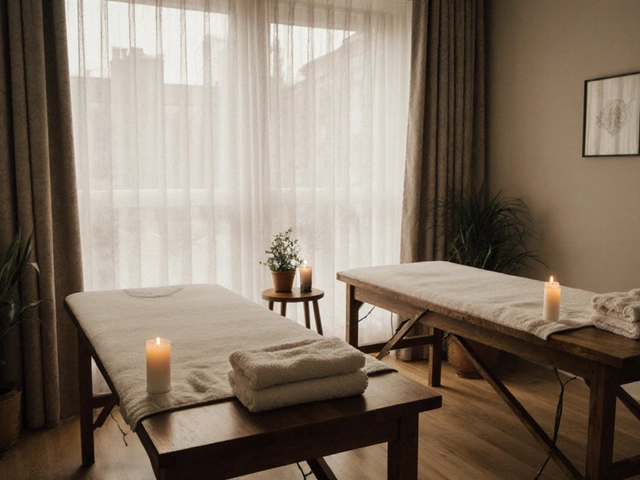
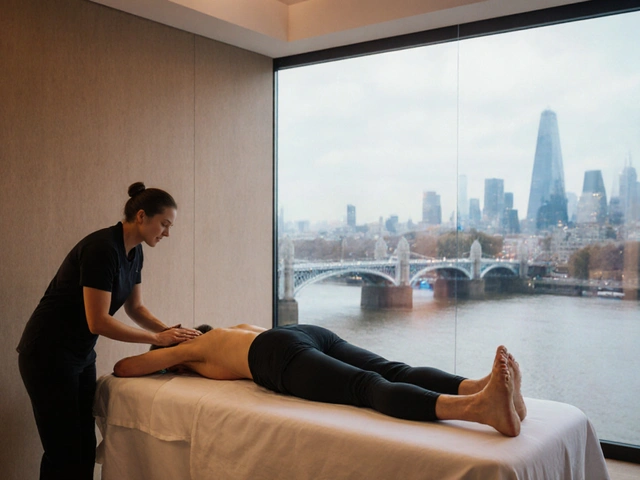
London has massage spots everywhere-from quiet basement studios in Notting Hill to luxury spas in Mayfair. Some are minimalist: just a room, a table, and soft music. Others feel like a five-star hotel suite. Don’t assume more luxury means better results. What matters is cleanliness, comfort, and whether the space makes you feel safe. If you’re nervous, ask if you can see the room before booking. A good therapist won’t mind.
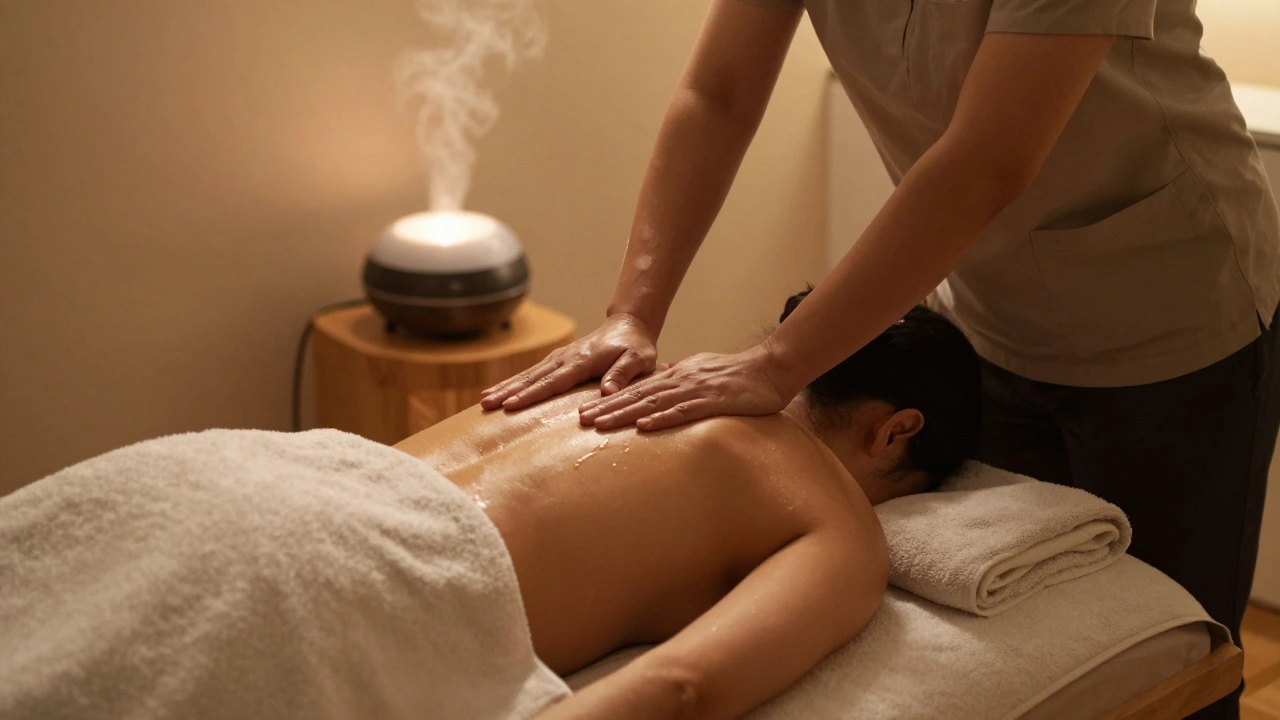
A typical session starts with a quick chat: where you feel tight, what you’re hoping for, any injuries. Then, you’ll undress to your comfort level (underwear or fully nude-your choice). You’ll lie on a heated table under a warm towel. The therapist works on one area at a time, draping you so you’re never exposed. Oil or lotion is used for glide. You might be asked to breathe deeply or shift positions. The whole thing usually lasts 60-90 minutes. You’re not supposed to talk unless you need to.
Most places in London offer custom blends. Want deep tissue with lavender? Done. Thai massage with a warm compress on your lower back? Easy. Some therapists even adjust pressure mid-session if you say, ‘That’s a bit too much.’ Don’t be shy. This is your body. Your comfort comes first.
Before your session, drink water. Avoid heavy meals. Tell your therapist about any pain, scars, or recent injuries. If you’re on medication or pregnant, mention it. If you’re nervous, say so. Many therapists have worked with first-timers-they know how to make you feel at ease. And after? Drink more water. Your body is flushing out toxins. You might feel a little sore the next day, especially after deep tissue. That’s normal.

If you’re booking a session, pick a time when you’re not rushing. Don’t schedule it right before a meeting. Let yourself have 30 minutes after to chill. Wear loose clothes to and from. Bring a water bottle. If you’re going to a new place, read reviews-not just ratings, but what people say about the therapist’s style. A 5-star place with 100 reviews is better than a 4.8 with only 3.
Look for therapists registered with a recognized body like the Complementary and Natural Healthcare Council (CNHC) or the Federation of Holistic Therapists (FHT). These groups require insurance, training, and ethical standards. Avoid places that don’t list qualifications. A good therapist will have a diploma, not just a weekend course. Ask: ‘What’s your training background?’ If they hesitate, walk away.
If you’ve never had a massage, start with Swedish. It’s gentle and familiar. If you’re going with a partner, many studios offer side-by-side rooms. It’s surprisingly romantic-not in a cliché way, but in a quiet, peaceful way. You’ll both leave feeling lighter. Just don’t try to chat during the session. Let the silence be part of the experience.
You’ll likely feel a mix of relaxation and slight discomfort-especially if it’s deep tissue. The room will be warm, quiet, and dim. You’ll lie on a table, covered with towels. The therapist will work on your back, shoulders, legs, or arms-depending on your focus. You might be asked to breathe deeply or shift slightly. Most people fall asleep. Others just zone out. Afterward, you’ll feel loose, calm, and maybe a little sleepy. It’s normal to feel tender the next day, especially if you’ve had deep work. Drink water. Take it easy. Your body is processing.
It starts with a quick chat about your needs. Then, you undress to your comfort level and lie under a towel. The therapist uses oil or lotion and applies pressure using hands, elbows, or even forearms. They’ll work systematically: back first, then legs, arms, neck. They’ll leave you covered at all times. You might hear soft music or nature sounds. The pressure should never be unbearable. If it is, speak up. Most sessions last 60-90 minutes. You’ll be left alone to get dressed afterward. No rush. No judgment.
Massage focuses on soft tissue: muscles, fascia, tendons. It’s about releasing tension and improving flow. Physiotherapy is about fixing movement problems-often after injury. Physiotherapists use exercises, stretches, and sometimes equipment. Massage doesn’t diagnose or treat injuries. It supports recovery. Think of massage as the ‘calm down’ part, and physio as the ‘fix it’ part. Many people use both: massage to relax, physio to rebuild.
There’s no single method. London offers a mix: Swedish (long strokes), deep tissue (slow, focused pressure), Thai (stretching and pressure points), Shiatsu (finger pressure along energy lines), and hot stone (warm stones for deep relaxation). Most therapists blend styles. A ‘Swedish’ session might include a bit of deep tissue on your shoulders. A ‘Thai’ session might use oils for smoother movement. The method depends on your goal, not just the label.
Always check if your therapist is registered with CNHC or FHT. These organizations require proof of training, insurance, and ongoing education. Avoid places that only offer ‘certificates’ from online courses. Real training takes 500+ hours. Ask to see their credentials. A good therapist will be happy to show them.
Hygiene is non-negotiable. Sheets should be changed between clients. Tools should be cleaned. Hands should be washed. If you’re uncomfortable, say so. Consent matters. You can stop a session at any time. No one should pressure you to undress more than you’re comfortable with. If you’re pregnant, diabetic, or have high blood pressure, tell your therapist-they’ll adjust.
| Practice | Purpose | Example |
|---|---|---|
| Change sheets between clients | Prevent infection | Ask if fresh linens are used |
| Wash hands before and after | Hygiene | Therapist should visibly wash up |
| Ask about medical conditions | Prevent harm | Tell them if you’re pregnant or have a clotting disorder |
| Allow you to stop at any time | Respect boundaries | You can say, ‘That’s too much’ or ‘I need to stop’ |
You are in control. If you don’t want your back worked on, say so. If you’re uncomfortable with a therapist’s tone, leave. No one should make you feel guilty for your boundaries. A good therapist will thank you for speaking up.
Avoid massage if you have an open wound, fever, blood clots, or recent surgery. If you’re pregnant, avoid deep tissue on your abdomen. If you have osteoporosis, avoid strong pressure. Always talk to your doctor if you’re unsure. Massage is safe for most-but not everyone. Listen to your body. If something feels wrong, it probably is.

Pair massage with mindfulness. Try five minutes of deep breathing after your session. Or take a warm bath with Epsom salts. Avoid caffeine right after-it can undo the calm. Some people journal their feelings afterward. Others just sit quietly with a cup of tea. Small habits make the benefits last longer.
Most Londoners go alone. But couples often book side-by-side sessions. It’s not romantic in a cliché way-it’s peaceful. You both relax, no talking, just quiet. Solo sessions give you space to really tune in. Both are valid. Choose what feels right for you.
At home, a foam roller or massage ball can help between sessions. A heated pad for your neck? Great. But don’t replace professional care with gadgets. They’re supplements, not substitutes. A good therapist knows how to use tools. You don’t need to buy anything.
One massage helps. Monthly massages transform. Think of it like brushing your teeth. You don’t wait until your tooth hurts. Same with your body. Many Londoners book every 4-6 weeks. That’s enough to stay ahead of tension building up. If you’re athletic or stressed, go every 2-3 weeks. Your body will thank you.
Use the CNHC or FHT directories. Look for therapists with 500+ hours of training. Read reviews that mention specific results: ‘helped my chronic shoulder pain’ or ‘made me feel calm after a tough week.’ Avoid places with only generic 5-star reviews. Real feedback talks about technique, not just ‘lovely ambiance.’
Check out the Massage Therapy Journal or the British Association of Massage Therapists. They offer free guides on what to expect, how to choose a therapist, and how to talk to your doctor about massage. Reddit’s r/MassageTherapy has honest, real-world advice from clients and therapists alike.
In London, massage is regulated under health and safety law. Practitioners must be insured. No one can legally offer ‘intimate’ services. If a place feels sketchy, walks away. Trust your gut. Massage is about healing-not anything else.
Books like The Art of Massage by Dr. Pauline W. Chen or Thai Yoga Massage by Dr. S. S. N. R. Murthy offer solid background. YouTube channels like ‘Massage Therapy UK’ show real techniques. Workshops in Camden or Shoreditch often offer short courses on self-massage. You don’t need to become a therapist to benefit.
Body massage in London isn’t just about muscle relief. It’s a quiet act of self-care in a loud city. It’s the chance to be touched with care, not just handled. Whether you’re stressed, stiff, or just tired of feeling like you’re running on empty, there’s a style out there for you. You don’t need to spend a fortune. You just need to show up.
Start small. Book one session. See how your body feels. Don’t expect miracles. Do expect to feel lighter. If it helps, go again. If not, try a different style. There’s no right or wrong-only what works for you.
Tried a massage style in London? Let us know what worked-or didn’t-in the comments. Follow this blog for more tips on wellness, movement, and finding calm in the city.
Some links may be affiliate links, but all recommendations are based on research and quality.
Word count: 1,728