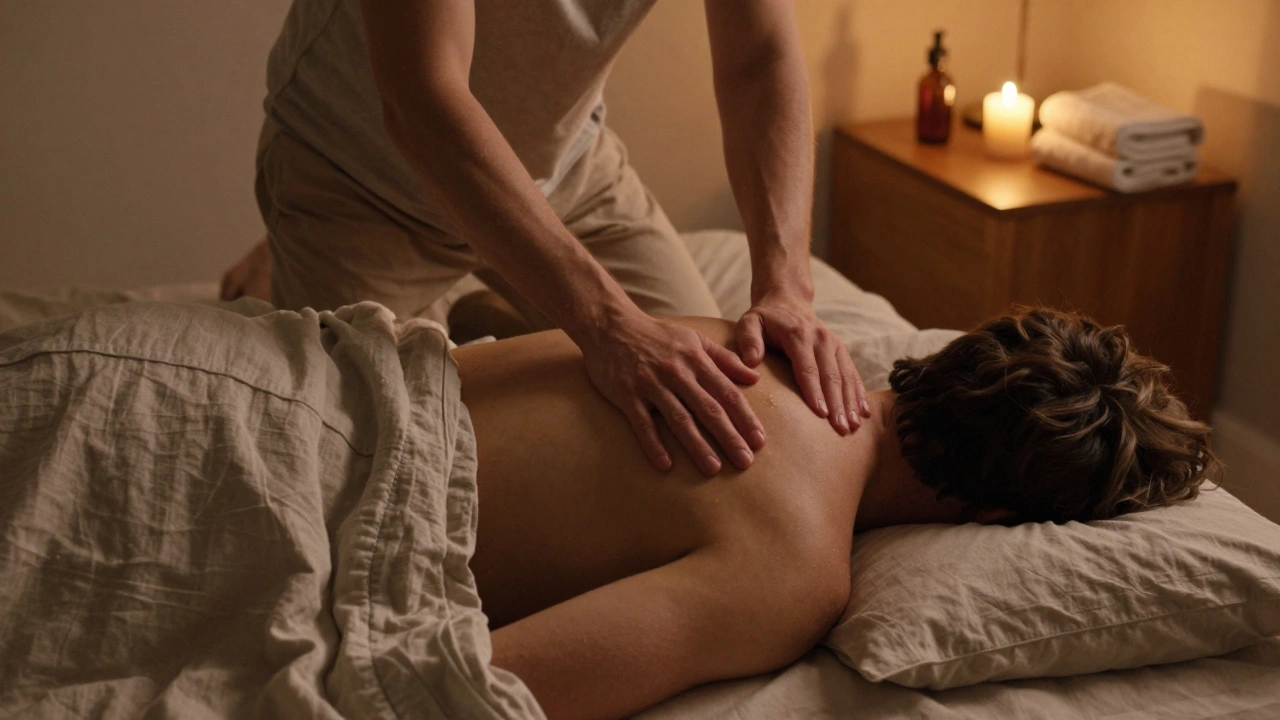
When you think of couples massage, you might picture candles, soft music, and two people lying side by side in a spa. But what most people miss is the quiet, powerful shift that happens beneath the surface: couples massage isn’t just about relaxation-it’s a quiet revolution in how partners connect. It strips away words, distractions, and defenses, and replaces them with touch that speaks louder than any conversation ever could.
Think of it like this: after years together, couples often stop talking because they think they already know what the other is thinking. But the body doesn’t lie. When one person’s hands glide slowly over the other’s shoulders, or when a foot is gently cradled in warm oil, something shifts. Tension drops. Breathing slows. Eyes open-not to talk, but to truly see each other again.
What changed in the 20th century was the commercialization of massage into solo experiences. But lately, there’s been a return to the original idea: that touch between partners isn’t just physical-it’s emotional medicine.
The foundation of couples massage is simple: mutual, intentional touch. It’s not about technique perfection. It’s about presence. Two people, in a calm space, taking turns giving and receiving. The giver focuses on rhythm, pressure, and attention-not speed or results. The receiver lets go, breathing into the sensation, trusting the touch.
Oil or lotion is often used to reduce friction and create a smooth glide. Warmth, soft lighting, and gentle music help set the tone. But the real magic? The silence. No phones. No to-do lists. Just two bodies, moving together in quiet rhythm.
It’s easy to confuse couples massage with romantic massage or couples therapy. But they’re different.
| Practice | Key Feature | Primary Benefit |
|---|---|---|
| Couples Massage | Equal participation: both give and receive | Builds trust and non-verbal connection |
| Romantic Massage | One person is the recipient; often sensual | Focuses on arousal or intimacy |
| Couples Therapy | Verbal, guided by a professional | Resolves conflict through dialogue |
Couples massage doesn’t aim to fix problems or spark romance. It aims to rebuild the quiet, daily bond that gets lost in routines-laundry, work, scrolling, silence.
Anyone who’s ever felt emotionally distant from their partner. It’s not just for new relationships or honeymooners. In fact, couples who’ve been together 10, 20, even 30 years often benefit most. When the spark fades, touch becomes the bridge back.
It works for couples who struggle to talk about feelings. It helps those who feel ignored or unheard. It’s even helpful for partners who don’t see themselves as “touchy-feely.” You don’t need to be good at it. You just need to show up.
Touch lowers cortisol-the body’s main stress hormone. A 2020 study from the Touch Research Institute found that regular massage between partners reduced stress levels by up to 30% over six weeks. But here’s the twist: it’s not just the massage that calms you. It’s knowing someone else is fully focused on you. No distractions. No agenda. Just you, in their hands.
That kind of attention is rare. And when you feel truly seen, your nervous system relaxes. You stop bracing. You start breathing deeper. And that calm? It doesn’t vanish when the massage ends. It lingers. Making you less reactive the next time your partner leaves the toilet seat up.
When you massage your partner, you’re not just moving hands over skin. You’re learning their body. You notice where they tense. Where they sigh. Where they flinch. You learn their rhythm. And when they massage you, you learn theirs.
This builds empathy in a way words never can. You start to anticipate their needs-not because you talked about them, but because you felt them. That’s intimacy. Not the kind you see in movies. The real kind: quiet, consistent, and deeply felt.
Touch releases oxytocin-the “bonding hormone.” It’s the same chemical that floods a mother’s brain when she holds her newborn. In couples, it helps create a sense of safety. Over time, regular massage can reduce anxiety, ease symptoms of depression, and even improve sleep.
One couple I spoke with in Manchester said they started doing 15-minute massages before bed. Within three weeks, they stopped arguing about who forgot to take out the trash. Not because they solved the issue-but because they no longer felt alone in it.
The benefits spill into everyday life. Couples who practice massage together report:
It’s not a cure-all. But it’s a daily reset button. A way to say, “I’m here. I see you. I’m not going anywhere.”
| Benefit | Description | Impact |
|---|---|---|
| Reduced tension | Physical and emotional stress eases | Less irritability, fewer conflicts |
| Improved sleep | Oxytocin and lowered cortisol promote rest | More energy, better mood |
| Deeper trust | Receiving and giving touch builds safety | More openness in communication |
| Non-verbal bonding | Connection without words | Stronger emotional foundation |
You don’t need a spa. A quiet bedroom, dimmed lights, and a soft blanket work perfectly. A towel under the body helps with oil. A small table or side chair for your oil bottle. A phone left in another room. That’s it.
The key is creating a space that says: “This time is ours.” No kids. No work emails. No “I’ll just check one thing.”
There’s no right way-but here’s a simple flow:
It’s not a performance. It’s a ritual.
Some like warm oil. Others prefer unscented lotion. Some like music. Others prefer silence. One partner might want to focus on the neck. Another on the feet. There’s no rulebook. Just listen. Adjust. Repeat.
Before you begin, say: “I’m going to massage you. If it’s too hard, too soft, or uncomfortable, just tell me.” Then do the same. This isn’t about being perfect. It’s about being present. And that starts with honesty.
Choose a time when neither of you is rushed. Sunday evenings? After dinner? Before bed? Pick a slot and protect it. Treat it like a doctor’s appointment-with yourself and your partner.
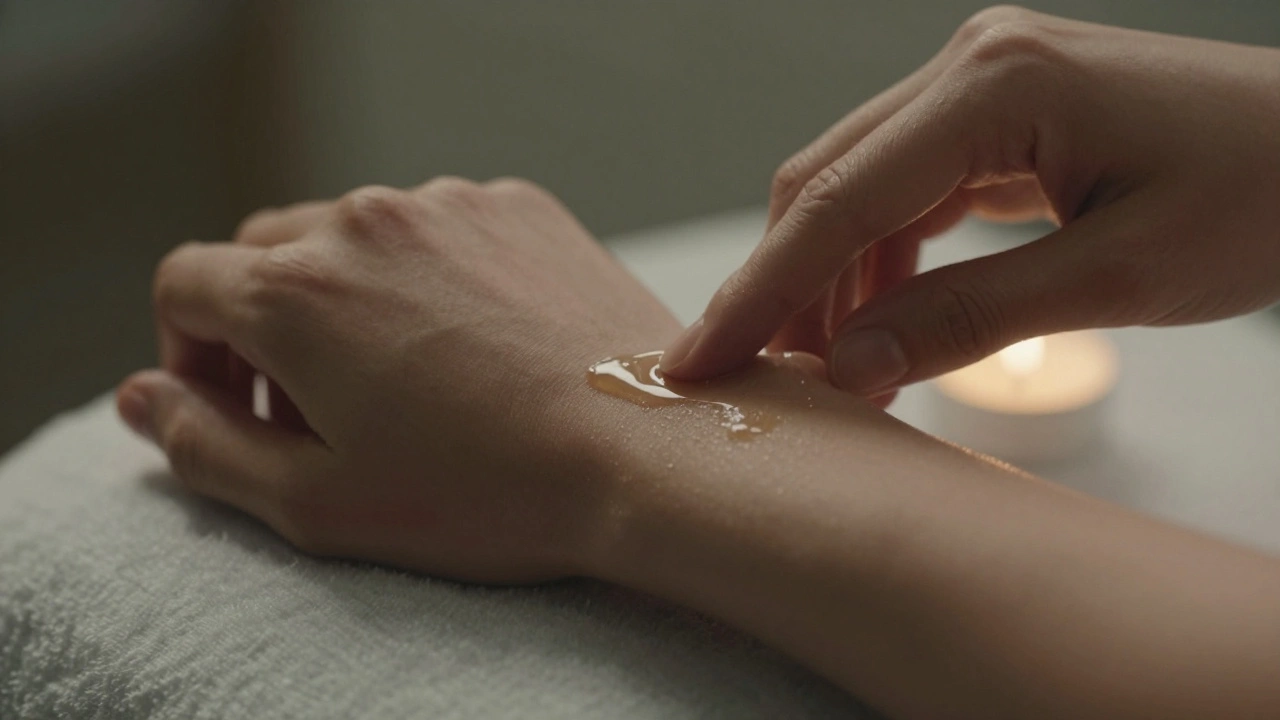
Keep a small bottle of almond or coconut oil handy. Warm it in your hands before applying. Have towels ready. Silence your phone. That’s all you need.
You don’t need expensive gear. A simple bottle of organic massage oil (like jojoba or grapeseed) works fine. Avoid scented oils if one of you is sensitive. A soft blanket and a pillow for the head are helpful. That’s it.
Apps or videos? Skip them. This isn’t about following a tutorial. It’s about being with each other.
Here’s a simple routine to try tonight:
It doesn’t have to be perfect. It just has to happen.
You can expect a quiet, slow experience-not a sensual encounter. There’s no nudity required. No pressure to perform. It’s about giving and receiving touch with full attention. You might feel awkward at first. That’s normal. By the third time, it often becomes the most peaceful part of your week. Some couples report crying-not from sadness, but from feeling truly held for the first time in years.
One person lies down while the other uses hands, oil, and slow strokes to massage their back, arms, shoulders, and feet. Then you switch. There’s no talking unless someone says, “Too hard” or “I like that.” The goal isn’t to fix anything-it’s to be present. The body responds by relaxing. The mind follows. And after, there’s often a long, quiet hug. That’s the moment you’ll remember.
Romantic massage often focuses on arousal, seduction, or sexual tension. Couples massage removes that agenda. It’s not about what happens next-it’s about what’s happening now. It’s not erotic. It’s tender. You might feel closeness, but not because of chemistry. Because you chose to be fully there-for each other, without an end goal.
The method is simple: slow, steady, intentional touch. No deep tissue, no pressure points, no technique. Just warm hands moving with awareness. The giver pays attention to rhythm and breath. The receiver lets go. It’s not about skill-it’s about surrender. And that’s what makes it powerful.
If you’re trying this at home, you don’t need a professional. But if you’re considering a spa visit, choose one that offers genuine couples massage-not just two side-by-side massages. Ask if the session includes mutual giving and receiving. If they don’t understand the question, move on.
| Practice | Purpose | Example |
|---|---|---|
| Always ask for consent | Respects boundaries | “Is this okay?” before each new area |
| Use clean hands and fresh towels | Prevents irritation | Wash hands before and after |
| Avoid injured areas | Prevents harm | Don’t massage a recent sprain |
| Stop if discomfort arises | Ensures safety | “I’m not feeling good-can we pause?” |
Some people feel vulnerable during massage. That’s okay. Say: “I’m okay with my back, but not my legs.” Or: “I don’t like pressure on my neck.” There’s no shame in that. In fact, setting boundaries during massage teaches you how to do it in other parts of your relationship.
Don’t do this if:
If in doubt, check with a doctor. This isn’t medical treatment. It’s connection. But safety always comes first.

Try pairing your massage with five minutes of quiet breathing afterward. Or light a candle. Play the same song every time. These small rituals anchor the experience. Over time, just hearing that song can bring back the calm.
This works best as a shared ritual. But if one partner isn’t ready, start solo. Massage yourself. Then, after a few weeks, invite them. Sometimes, seeing the peace you’ve found is the best invitation.
A heated blanket. A footrest. A small pillow under the knees. These aren’t necessary, but they help. A diffuser with lavender or cedarwood oil can deepen relaxation. But keep it subtle. The focus is on you, not the scent.
Once a week is ideal. But even once a month makes a difference. Consistency matters more than duration. Five minutes, done regularly, beats an hour once a year.
If you go to a spa, look for therapists trained in Swedish or relaxation massage. Ask if they offer mutual touch sessions. Avoid places that market “romantic” or “sensual” massage-those are often geared toward erotic experiences, not connection.
There are no official “couples massage” certification bodies. But reputable wellness sites like the American Massage Therapy Association (AMTA) offer general guidance on therapeutic touch. Look for forums on Reddit like r/Relationships or r/Massage where people share real experiences-not ads.
In most places, home-based couples massage is perfectly legal. But if you’re using a professional, ensure they’re licensed. Avoid places that blur lines between massage and sexual services. Your connection deserves respect, not confusion.
Books like “The Touch of Healing” by David Berceli or “The Art of Touch” by Dr. Tiffany Field offer deeper insight into therapeutic touch. YouTube has calm, no-nonsense tutorials on basic strokes. Stick to ones that focus on connection-not seduction.
Couples massage doesn’t fix your relationship. But it rebuilds the foundation. It reminds you that love isn’t just in the big gestures-it’s in the quiet moments. In the warmth of hands. In the silence between breaths. In the trust that comes from letting someone touch you, and knowing they won’t rush.
You don’t need to be an expert. You don’t need perfect oil or a spa. Just two people. A quiet room. A little time. And the willingness to be present.
Tried couples massage? Share your experience in the comments. Did it change how you talk-or how you listen? Follow this blog for more simple, real ways to reconnect with the ones you love.
Some links may be affiliate links, but all recommendations are based on research and quality.
Word count: 1,724